What Is a Listicle? A Small Business Guide for 2026

For small businesses, listicles are more than a content style. They’re one of the main ways customers discover brands on Google, and increasingly, one of the main sources AI tools like ChatGPT pull from when they recommend products.
This guide explains what a listicle is in plain English, walks through the most common types with business examples, and shows you two ways to put them to work: publishing your own, and getting featured in other people’s.
What Is a Listicle?
A listicle is an article built around a numbered or bulleted list, where each item has its own subheading and a short explanation. The word blends “list” and “article,” and you’ll also hear it called a list post or list article.
A standard article moves through an argument in flowing paragraphs. A listicle breaks the same information into self-contained chunks, so readers can scan, skip to what they need, and still walk away with something useful. “9 Ways to Lower Your Customer Acquisition Cost” is a listicle. “Why Our CAC Doubled Last Year” usually isn’t.
Why Listicles Matter for Small Businesses in 2026
Listicles matter because they sit right where buying decisions happen. When someone searches “best payroll software for small teams,” they’re close to choosing. The brands on that list get considered; the ones that aren’t, don’t.
They Are Easy to Scan and Share
Most people skim before they read. A clear list with descriptive subheadings lets a busy founder or office manager find the one tip or tool they came for in seconds. That ease also makes listicles simple to share in Slack threads, newsletters, and LinkedIn posts, which extends their reach well beyond search.
Google and AI Tools Cite Them Often
Listicles have become a key input for AI search. Ahrefs analyzed 26,283 source URLs behind ChatGPT answers and found that “best X” blog lists made up 43.8% of all cited page types, more than any other kind of page.
Position inside those lists matters too. Peec AI studied nearly 200,000 AI responses and found that ranking first in a frequently cited listicle raised a B2B SaaS brand’s chance of being mentioned in the AI answer by 16.5 percentage points. For a small business competing with bigger names, that’s a real opening.
They Attract Backlinks and Mentions
Good listicles become reference pages. Writers link to a solid “statistics” or “tools” list when they need a source, and every brand featured on a list has a reason to share it. Over time, that steady stream of links and mentions builds the authority that helps the rest of your site rank.
6 Common Types of Listicles (With Business Examples)
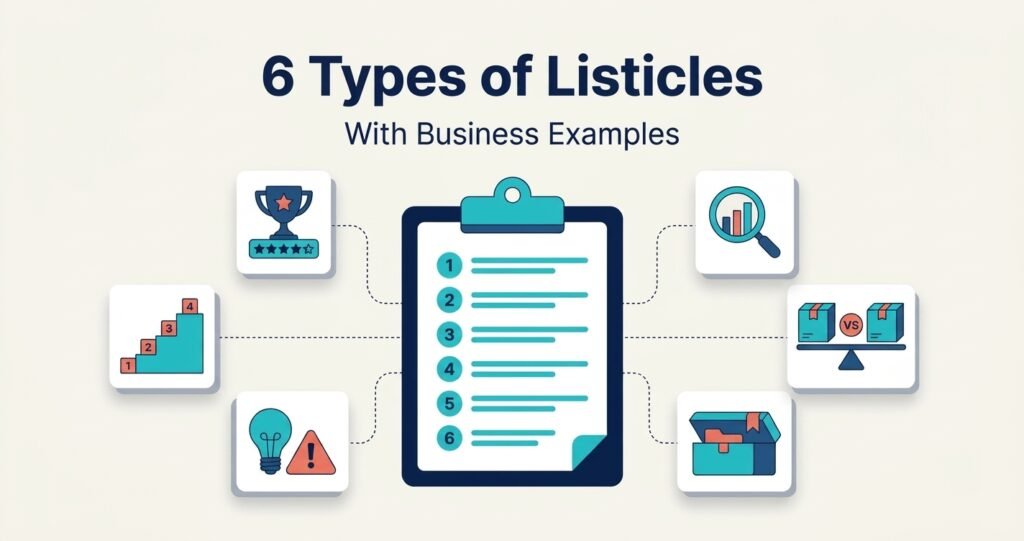
Most listicles fall into one of six types. Pick the one that matches what your reader is trying to do: compare options, learn a process, avoid a mistake, or find a resource.
1. Best-Of and Product Roundups
These rank or recommend products, tools, or services in a category. They target high-intent searches and are the type AI tools cite most often. Example: “The 8 Best Project Management Tools for Remote Agencies.”
2. How-To and Step-by-Step Lists
Each item is a step in a process, in the order the reader should follow it. They work well for onboarding content and product education. Example: “How to Set Up Email Automation in 6 Steps.”
3. Tips and Mistakes Lists
These share practical advice or warn readers away from common errors. They’re easy to write from your own customer conversations and build trust fast. Example: “7 Bookkeeping Mistakes That Cost Small Businesses Money.”
4. Resource and Tool Lists
A curated collection of templates, tools, courses, or statistics. They earn links because other writers use them as references. Example: “50 Customer Retention Statistics for 2026.”
5. Comparison and Alternatives Lists
These help readers choose between named options, often targeting “[competitor] alternatives” searches. Buyers who search these are already shopping. Example: “6 Mailchimp Alternatives for Growing Ecommerce Brands.”
6. Pros and Cons Lists
A balanced look at the upsides and downsides of a choice. They answer “is it worth it” questions and show readers you aren’t just selling. Example: “Hiring a Virtual Assistant: 5 Pros and 4 Cons.”
Two Ways Small Businesses Can Use Listicles
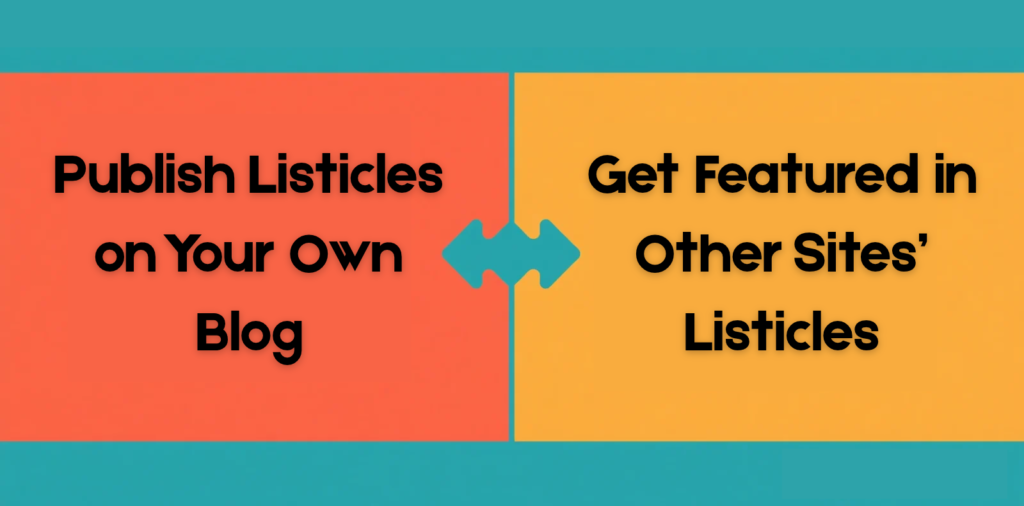
Most guides stop at “write a listicle for your blog.” That’s only half the opportunity. The other half is getting your brand into the listicles other sites already rank for. The two work best together: your own lists build topical authority, while third-party lists build trust and AI visibility.
Publish Listicles on Your Own Blog
Owned listicles let you answer your customers’ questions on your terms. Start with topics you already explain on sales calls or in support tickets, then turn them into tips, how-to, or resource lists.
If you publish a “best of” list in your own category, include yourself honestly. State your criteria, cover real competitors fairly, and disclose that you’re on the list. Ahrefs’ own experiment found self-promotional pages helped a new brand get mentioned in AI answers but barely moved the needle for an established one. Owned lists help, but they can’t do the whole job.
Get Featured in Other Sites’ Listicles
Third-party listicles carry more weight because someone else is vouching for you. Getting included usually comes down to outreach:
- Find the lists that matter. Search Google for “best [your category]” and ask ChatGPT or Perplexity the questions your buyers ask. Note which listicles show up again and again.
- Check each site. Look for recent updates, real traffic, and a clear fit with your audience. A list last updated in 2022 isn’t worth the effort.
- Pitch the editor. Send a short email explaining why your business belongs, what makes it different, and a ready-to-use blurb that matches the list’s format.
- Make it easy to say yes. Offer screenshots, pricing details, or a free account so the editor can review you properly.
Aim for better positions over time, not just inclusion. As the Peec AI data shows, brands listed near the top get mentioned more often and earlier in AI answers.
How to Write a Listicle That Ranks
A listicle that ranks gives each item real substance and matches exactly what the searcher wants. Follow these five steps.
1. Start With Keyword Research and Search Intent
Pick a keyword your customers actually search, then look at the current top results. If they’re all “best of” roundups, a how-to list won’t rank. Match the format Google already rewards, then find what those pages miss.
2. Choose a Number That Fits the Topic
Don’t pick 25 because it sounds impressive. Use as many items as the topic genuinely supports. Seven strong tools beat fifteen padded ones, and readers can tell the difference.
3. Write a Useful Blurb for Every Item
Each item should stand on its own. For product lists, cover who it’s best for, key features, pricing, and one honest drawback. For tips, explain the why and give a concrete example. One-line entries are a sign of a thin list.
4. Use Clear Subheadings, Visuals, and Criteria
Write subheadings that tell readers what they’ll get, not clever teasers. Add screenshots, a summary table, or a simple graphic. For ranked lists, explain how you chose and ordered the items. That transparency builds trust with readers, Google, and AI tools.
5. Update It Regularly to Stay Current
Freshness matters. In the Ahrefs study, 79.1% of the blog lists ChatGPT used as sources had been updated in 2025. Review your listicles every few months: swap out discontinued tools, refresh pricing, and update the year in the title only when the content has really changed.
Listicle Mistakes That Can Hurt Your Brand
A bad listicle can do more harm than no listicle at all. Watch out for these four mistakes:
- Clickbait titles. “You Won’t Believe #7” might win a click, but readers bounce fast when the content doesn’t deliver. That hurts engagement and trust.
- Thin items. A list of tool names with one sentence each gives readers nothing to act on. Depth is what separates a useful listicle from filler.
- Outdated information. Dead links, old prices, and discontinued products tell readers, and search engines, that nobody’s maintaining the page.
- Biased self-promotion. Putting yourself at #1 with no criteria or disclosure looks like an ad. Google has said it’s aware of weak “best of” lists and works to combat that abuse in Search and Gemini.
The fix for all four is the same: write for the reader first. Honest, detailed, current lists are the ones that keep ranking.
Final Thoughts: Start With One Listicle
You don’t need a full content calendar to get value from listicles. Start with two small moves.
First, publish one listicle on your own blog that answers a question your customers ask all the time. Second, find one relevant “best of” list in your niche that you should already be on, and pitch the editor.
Do both well, keep them updated, and you’ll build visibility in Google and in the AI answers your buyers increasingly rely on. If you’d rather have an expert handle listicle placements and link building for you, that’s exactly the kind of work we help brands with.
Frequently Asked Questions About Listicles
Are listicles still good for SEO in 2026?
Yes, listicles are still one of the most effective formats for SEO in 2026. They match how people search for recommendations; they’re easy for Google to parse, and AI tools cite them heavily. The catch is quality: thin, outdated, or heavily self-promotional lists are more likely to lose rankings. Focus on depth, honesty, and regular updates.
How long should a listicle be?
A listicle should be as long as it takes to cover each item properly. For most business topics, that’s 1,200 to 2,500 words. Product roundups often run longer because each item needs features, pricing, and pros and cons. Check the word count of the top-ranking pages for your keyword and aim to match their depth, not just their length.
Do listicles need to be numbered?
No, listicles don’t have to be numbered, but numbers usually help. Numbered titles set clear expectations and tend to attract clicks, and numbered steps are essential when order matters. Bulleted lists work fine for unranked collections, like resources or ideas, where the sequence doesn’t change the meaning.
What is the difference between a listicle and an article?
A listicle is a type of article organized as a list of separate items. A traditional article develops one idea through connected paragraphs, so readers usually go from start to finish. A listicle lets readers scan and jump to the item they need. Both can be in-depth; the difference is structure, not quality.
Can I include my own business in a listicle?
Yes, you can include your own business, as long as you’re transparent about it. Disclose that you’re on the list, explain your selection criteria, and cover competitors fairly. Readers and search engines both distrust lists that look like disguised ads. For more credibility, pair your own list with placements on independent third-party listicles.