What Is Link Building and How Can It Help Your Brand?

You’ve shipped a great product. Your blog publishes every week. Your feature pages are clean and fast. Yet your best pages still sit on page three of Google, while a competitor with a thinner product outranks you for the keywords that bring in demos.
In most of the SaaS sites I’ve audited, the gap isn’t content. It’s authority. Search engines, and now AI assistants, need outside proof that your site deserves to be trusted, and links from other websites are still the clearest form of that proof.
I’ve spent the last several years doing SEO outreach for SaaS and B2B brands, building more than 1,000 links through listicles, niche edits, brand mentions, and partnerships. This guide explains what link building is, how it helps a SaaS brand grow, and how to decide if it belongs in your SEO strategy.
What Is Link Building?

Link building is the process of getting other relevant websites to link to pages on your site. Each of those links is called a backlink. The website that links to you is a referring domain, and the clickable words in the link are the anchor text.
Think of a backlink as a referral from a peer. If a respected marketing publication links to your onboarding guide, it is telling its readers, and Google, that your page is worth a look. One referral from a trusted source carries far more weight than dozens from strangers nobody knows.
Link building sits under off-page SEO. On-page SEO covers what you control on your own pages, such as content, headings, and keywords. Technical SEO covers how search engines crawl and index your site. Off-page SEO covers the signals that come from outside your site, and links are the biggest of them.
For a SaaS company, this matters because the three areas work together. Great content with no links often struggles to rank. Strong links pointing to weak or slow pages rarely convert. Link building is the piece that makes your content and product pages visible to the people searching for them.
Why Links Still Matter for SEO in 2026
Google has said for years that links help it find new pages and understand how important and relevant they are. Its own guide to how Search works describes how it discovers pages by following links from known pages. When two pages answer a query equally well, the one with stronger, more relevant links usually wins.
That doesn’t mean links are the only thing that counts. Content quality, search intent, and page experience all matter. But in competitive SaaS categories like CRM, project management, or HR software, nearly every top result has good content. Links are often what separates position three from position thirteen.
There is also a newer reason links matter: AI search. Tools like Google’s AI Overviews, ChatGPT, and Perplexity build their answers from sources they consider trustworthy. Brands that are mentioned and linked across respected industry sites show up more often in those answers.
I see this pattern regularly in client work. When a SaaS brand earns placements in well-known “best tools” roundups, it tends to start appearing in AI answers for the same category. Link building is no longer only about ranking a page. It is about making your brand part of the conversation wherever buyers search.
How Link Building Helps SaaS Brands Grow
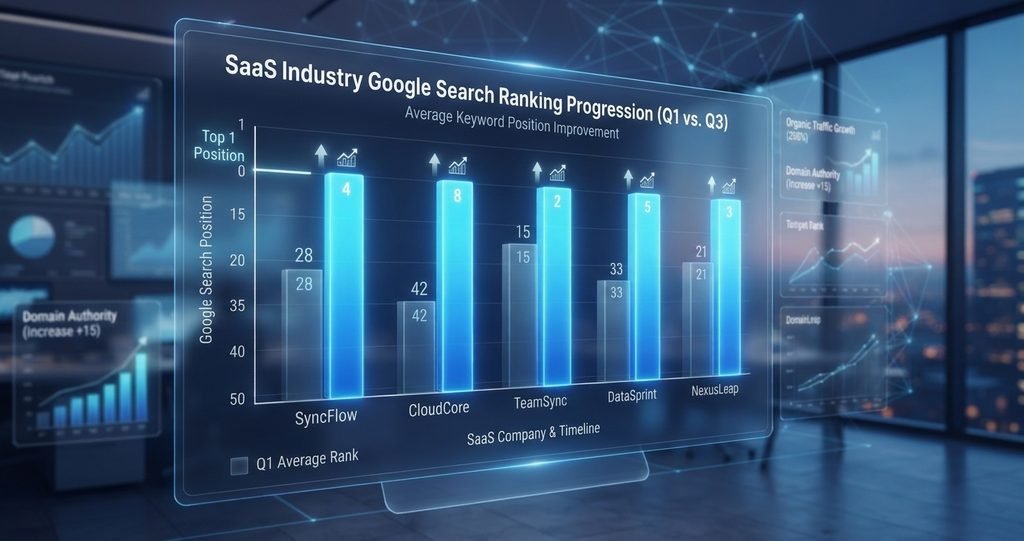
Rankings are only useful if they turn into trials, demos, and revenue. The good news is that link building supports SaaS growth in several ways beyond a higher position in Google.
Below are the four benefits I see most often when SaaS teams invest in links consistently for six months or more.
Higher Rankings for High-Intent Keywords
The keywords that drive SaaS revenue are usually competitive. Terms like “best invoicing software” or “Asana alternatives” attract buyers who are ready to compare and sign up. Every serious competitor wants those positions, and content alone rarely wins them.
Pointing quality links at your comparison, alternatives, and use-case pages gives them the authority they need to compete. Those pages also pass some of that strength to the rest of your site through internal links, which lifts related pages too.
Referral Traffic From the Right Audiences
A link on a relevant site is also a door that real people walk through. A mention in a respected newsletter or an industry blog can send readers straight to your product page, often with more context and trust than an ad.
This traffic tends to convert well because it is pre-qualified. Someone who clicks from an article about remote team tools to your async video app already has the problem you solve. That makes referral traffic one of the most underrated returns on link building.
Visibility in Listicles and “Best Tools” Roundups
SaaS buyers love lists. Before they book a demo, many of them read two or three “best X software” articles to build a shortlist. If your product isn’t on those lists, you may never make the shortlist at all.
Getting featured in these roundups gives you a link, a product description in front of buyers, and a stronger chance of being cited by AI tools, which lean heavily on these articles. In my outreach work, listicle placements are often the fastest way for a newer SaaS brand to show up where buyers compare options.
Brand Credibility With Buyers and Investors
Links and mentions on known publications build trust beyond search. When a prospect, partner, or investor searches your brand, seeing it featured on credible sites tells them you are an established player.
This credibility compounds. Journalists and bloggers are more likely to cite brands that already appear in reputable sources. Each strong mention makes the next one easier to earn.
What Makes a High-Quality Backlink?
Not all links are equal. Before I pitch any site, I check it against the same handful of signals, and I recommend SaaS teams do the same before they spend time or budget on a placement.
- Topical relevance: The linking site and page should cover topics close to yours. A link from a marketing blog to a marketing automation tool makes sense. A link from a pet supplies store does not.
- Authority and real traffic: Metrics like Ahrefs Domain Rating or Moz Domain Authority are useful filters, but I always check organic traffic too. A site with a high score and almost no visitors is often a red flag.
- Editorial placement: Links inside the main body of an article, surrounded by relevant text, carry more weight than links in footers, sidebars, or author bios.
- Natural anchor text: Anchors should read naturally, such as your brand name or a descriptive phrase. Repeating the same exact-match keyword across many links looks manipulated.
- Dofollow vs. nofollow: Dofollow links pass ranking value. Nofollow, sponsored, and UGC links pass less, but they still bring traffic and brand visibility, so they are not worthless.
The common thread is quality over quantity. One link from a respected SaaS or marketing publication will usually do more for you than 50 links from unrelated, low-traffic sites. In my experience, the low-quality links can even hurt, because they make your link profile look unnatural.
A simple test I use: would this link still be worth having if Google didn’t exist? If the page has real readers who might click through to your product, the answer is usually yes, and that’s the kind of link worth pursuing.
6 Link Building Tactics That Work for SaaS
There are dozens of link building tactics, but only a few consistently pay off for SaaS brands. The ones below are the tactics I use most in day-to-day outreach, because they earn relevant links that buyers actually see.
You don’t need to run all six at once. Most SaaS teams get the best results by picking two or three that fit their resources and doing them well every month.
1. Listicle and Roundup Placements
Listicle outreach means pitching your product to authors of “best tools” articles in your category. You find articles that already rank for terms like “best email marketing software” and ask the author to consider adding your tool.
The pitches that work are short and specific. I include a ready-to-use blurb that matches the article’s format, a clear reason the product fits the list, and an easy way to try it. Many authors update these articles regularly and welcome a strong new option.
2. Guest Posts on Relevant Industry Sites
Guest posting means writing an article for another website in your industry, usually with a link back to your site in the content or author bio. For SaaS brands, the best targets are blogs your buyers already read, such as marketing, sales, or operations publications.
The key is to write something genuinely useful for that site’s readers, not a thinly disguised ad. A practical guide from your product or customer success team shows real expertise. The link becomes a natural reference rather than a sales pitch.
3. Niche Edits on Existing Articles
A niche edit is a link added to an article that is already published and indexed. Instead of creating new content, you find a relevant post where your resource would genuinely improve the piece and ask the site owner to add it.
Niche edits work well because the page already has age, traffic, and sometimes its own backlinks. The important part is relevance. The link should add value for the reader, such as pointing to a deeper guide, a template, or original data on the same topic.
4. Unlinked Brand Mentions
SaaS brands get mentioned online more often than most teams realize. Reviews, podcasts, roundups, and news stories may name your product without linking to it.
Tools like Ahrefs or Google Alerts can surface these mentions. A friendly note asking the author to turn the mention into a link tends to get a positive response, because the author already knows and likes your brand. It is one of the easiest wins in link building.
5. Partner, Integration, and Customer Links
Most SaaS products integrate with other tools, work with agencies, or serve customers who are happy to share their story. Each of those relationships can lead to a link from an integrations directory, a partner page, or a case study.
Start with the relationships you already have. Ask integration partners to list you in their marketplace, offer co-marketing content, and invite happy customers to share how they use your product. These links are highly relevant and build trust with buyers.
6. Original Data and Linkable Assets
Linkable assets are resources people want to reference, such as industry benchmarks, survey reports, free tools, or templates. SaaS companies are in a strong position here, because product usage data can often be turned into insights nobody else has.
A report like “How 1,000 remote teams run meetings” gives writers and journalists a reason to link to you for years. Pair the asset with outreach to writers who cover the topic, and it can keep earning links long after launch.
Link Building Mistakes to Avoid
The fastest way to waste a link-building budget is to chase volume. Buying links from link farms or private blog networks (PBNs), joining large link exchange schemes, or paying for links that aren’t marked as sponsored all go against Google’s spam policies. The risk is real: spam updates can wipe out the value of those links, and in serious cases, a manual action can push your whole site down in search.
Other common mistakes are subtler. Over-optimized anchor text, where most links use the same exact-match keyword, looks unnatural. So does chasing high domain metrics on sites that have nothing to do with your product. I’ve seen SaaS teams celebrate links from “DR 70” sites that turned out to be content farms with no real readers.
There’s also a mistake that’s specific to SaaS: sending every link to the homepage. Your homepage will earn brand links naturally. The pages that need help are your feature pages, comparison pages, integration pages, and use-case pages, because those are the ones that rank for buying-intent searches and drive sign-ups.
Before you start any campaign, map out which pages you want to rank and why. Then build links to those pages with natural, varied anchor text. That simple plan avoids most of the problems I see in SaaS link profiles.
How to Measure Link Building Results
Link building is easier to justify when you track the right numbers. I suggest SaaS teams review these metrics monthly:
- Referring domains over time: Steady growth in unique, relevant sites linking to you is the clearest sign your efforts are working.
- Rankings for target keywords: Track the specific pages you’re building links to, not just your overall visibility.
- Organic traffic and sign-ups to linked pages: Connect rankings to business results in Google Analytics or your product analytics tool.
- Referral traffic: See which placements send visitors who actually start trials or book demos.
- Brand mentions in AI answers: Check whether tools like ChatGPT, Perplexity, or Google’s AI Overviews mention your brand for your category’s key questions.
Set expectations early. Links rarely move rankings overnight. In most SaaS campaigns I’ve worked on, meaningful ranking changes show up after about three to six months, depending on how competitive the keyword is and how strong the site was to begin with.
That’s why link building works best as a long-term channel rather than a one-off project. Like compound interest, each quality link adds to the authority you’ve already built. Teams that stay consistent for a year or more usually see the strongest returns.
Is Link Building Worth It for Your SaaS Brand?
For most SaaS companies that rely on organic search, the answer is yes, as long as the foundation is in place. Link building works best when you already have solid content and well-built product, feature, and comparison pages worth linking to. If those pages don’t exist yet, start there first, because links amplify what you have rather than replace it.
The next question is who does the work. An in-house marketer can handle unlinked mentions and partner links, but outreach for listicles, guest posts, and niche edits takes time, relationships, and a lot of follow-up. Many SaaS teams find it more efficient to work with an outreach specialist who already has those relationships and knows what a quality placement looks like.
Whichever route you choose, judge link building by its business impact: rankings for buying-intent keywords, qualified referral traffic, and a brand that shows up wherever your buyers research. Done well, it becomes one of the most durable growth channels a SaaS company can build.
Frequently Asked Questions About Link Building
These are the questions SaaS founders and marketers ask me most often when they’re deciding whether to invest in link building.
If your question isn’t covered here, feel free to reach out through the contact form on this site.
How long does link building take to show results?
Most SaaS sites see meaningful ranking changes about three to six months after they start building quality links consistently. Search engines need time to find new links and reassess a page’s authority.
The timeline depends on keyword competition, your site’s current authority, and the quality of the links. Newer domains and highly competitive terms usually take longer, while referral traffic from a good placement can start on day one.
Is link building still relevant with AI search?
Yes, and arguably more than before. AI tools such as Google’s AI Overviews, ChatGPT, and Perplexity draw their answers from sources they consider trustworthy.
Brands that are linked and mentioned across respected industry sites are more likely to be cited in those answers. Link building now supports both traditional rankings and visibility in AI-generated recommendations.
Is link building the same as getting backlinks?
They are closely related but not identical. A backlink is a single link from another site to yours, while link building is the ongoing strategy and process of earning those links.
That process includes choosing which pages to promote, researching target sites, writing pitches, creating linkable content, and tracking results. Backlinks are the outcome; link building is the work that produces them.
How many backlinks does a SaaS website need?
There is no fixed number. The links you need depend on how many links the pages already ranking for your target keywords have.
A practical approach is to check the top results for a keyword in a tool like Ahrefs or Semrush and note how many referring domains they have. Aim to close that gap with relevant, high-quality links rather than chasing a raw total.
Is buying backlinks against Google’s guidelines?
Yes. Paying for links that pass ranking value without marking them as sponsored or nofollow violates Google’s spam policies.
Paid placements are acceptable when the link is properly labeled with a rel=”sponsored” or rel=”nofollow” attribute. Unlabeled paid links risk being ignored by Google or, in serious cases, a manual action against your site.
