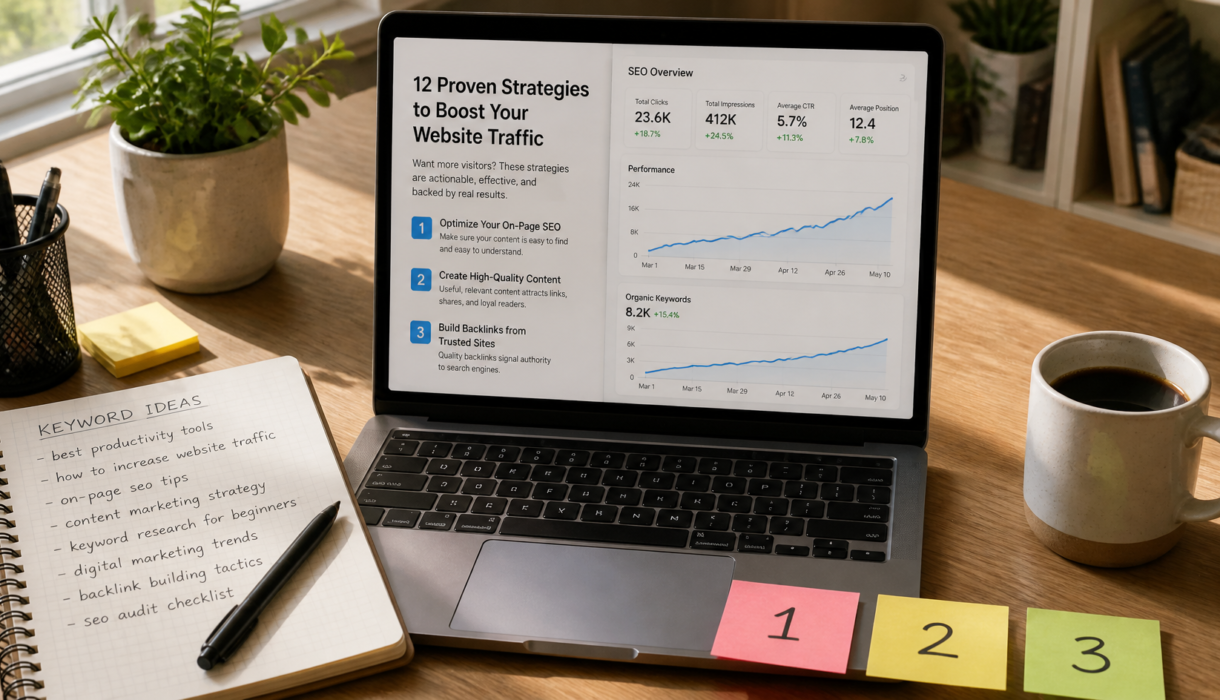

What is a listicle?
A listicle is an article whose main body is a series of items presented as a list. The word blends “list” and “article,” and Merriam-Webster dates its first known use to 2007.
Most listicles follow the same pattern. A short introduction sets up the topic, then each item gets its own numbered subheading followed by a few sentences, an image or a short comparison. The headline usually promises a number, such as “9 Ways to Cut Your Shop’s Energy Bill.”
What separates a listicle from a plain bulleted list is the explanation under each item. A phone directory of plumbers is just names and numbers. A useful listicle tells the reader why each item is there, who it suits and what to watch out for.
Linguist Arika Okrent made a case for the format in the University of Chicago Magazine in 2014. She argued that lists give readers a predictable structure: they break a large topic into pieces and put them in order, which is how people make sense of information in general. That predictability is still the reason readers skim, save, and share lists today.
Listicle vs. article: what’s the difference?
A standard article moves through an argument or story in flowing paragraphs, and each section depends on the one before it. A listicle makes each item stand on its own, so a reader can jump straight to item six without reading items one to five. Many good listicles combine both: list structure on the outside, real depth inside each entry.
Common types of listicles
Listicles fall into a handful of types, and each one fits a different stage of your customer’s thinking. Here are the ones small businesses use most, with an example headline for each:
-
- Best-of roundups: A ranked or curated set of options in one category. Example: “8 Best Wedding Florists in Cebu City.”
-
- Alternatives and comparisons: Options to replace a well-known product, or two to three options side by side. Example: “5 Square Alternatives for Small Cafés.”
-
- How-to steps: A process broken into numbered stages. Example: “How to Winterize an Outdoor Patio in 6 Steps.”
-
- Tips and ideas: Separate ways to reach one goal, in no fixed order. Example: “12 Ways to Get More Repeat Customers.”
-
- Mistakes and myths: Common errors your expertise can correct. Example: “7 Bookkeeping Mistakes That Cost Small Retailers Money.”
-
- Resource lists: Tools, templates or suppliers worth knowing. Example: “10 Free Design Tools for Restaurant Menus.”
Ranked lists dominate what AI tools pick up. One May 2026 review of about 25,000 heavily cited pages found that ranked formats made up 71% to 86% of the listicles each AI model cited, depending on the model. Unranked tips lists came a distant second.
That doesn’t mean every business should publish ranked roundups. Tips, how-to, and mistakes lists are where your own expertise shows best, and they carry far less risk than ranking competitors (more on that below).
[Image: example layout of a numbered listicle showing headline, short intro and three numbered item headings]
Why listicles matter for small businesses in 2026
Listicles now shape how buyers find businesses in two places: regular search results and AI-generated answers. When someone asks ChatGPT for “the best accountant for freelancers,” the tool often builds its answer from list articles rather than from any single company’s website.
Several large studies from the past year point the same way:
| Study | Sample | Key finding |
| Wix Studio AI Search Lab (March 2026) | 75,000 AI answers, 1.06 million citations | Listicles were 21.9% of all citations and 40.9% for commercial queries |
| Ahrefs (December 2025) | 26,283 ChatGPT source URLs | “Best X” blog lists were 43.8% of cited page types |
| Evertune via Search Engine Land (May 2026) | About 25,000 top-cited URLs across six AI tools | 63% of nearly 400 million citations pointed to listicles |
The picture is not one-way, though. Seer Interactive tracked more than 2 million ChatGPT citations and found that listicle citations fell 30% from December 2025 to January 2026, with Wikipedia and Reddit gaining share. The format still wins, but thin or outdated lists are being dropped.
For a small business, this creates three practical uses:
Answer buying questions: A helpful list on your site can rank for the questions your customers type before they buy.
Show expertise quickly: A tips or mistakes list lets you demonstrate know-how in a format busy readers will actually finish.
Get recommended by AI tools: Appearing on trusted third-party lists makes it more likely AI assistants mention you when someone asks for options.
Why listicles Matter in SEO
- Scannability: The structured, bite-sized format allows mobile readers and fast scanners to digest information quickly.
Search Engine and AI Parsing
- Search Engine and AI Parsing: Search engines (like Google) and AI answer engines easily chunk, parse, and extract listicle structures to build featured snippets, rich results, and direct citations.
- Multiple Keyword Targeting: A single listicle naturally ranks for a broad head term (e.g., “SEO tips”) while capturing long-tail traffic for every individual item listed inside it.
- High Engagement: The format earns outsized social shares and links compared to standard blocks of text.
Search Engine and AI Parsing
How to write a listicle in 7 steps
A good listicle looks simple to read but takes real planning to write. Follow these steps to produce one that serves readers, search engines, and AI tools.
-
- Start with a question your customers already ask. Use a keyword tool, your sales inbox or your own front-desk conversations to find it. Then type the question into Google and an AI assistant to see which lists already appear and what they leave out.
-
- Choose the type and the length. Match the type to the question (how-to for processes, tips for goals, roundups for comparisons). For comparison lists, depth now matters: in Seer Interactive’s data, lists gaining AI citations covered 10 to 20 options, while shrinking ones covered 5 to 8. Tips lists can be shorter if every item earns its place.
-
- Decide and state how items were chosen. Write two or three sentences on your selection criteria near the top: what you tested, compared or measured. Lists that disclosed a clear method grew fastest in the same Seer study.
-
- Give every item the same structure. Pick a short template and repeat it, for example: what it is, who it suits, one strength, one drawback, and price where relevant. A consistent pattern helps readers compare and makes each entry easy for AI tools to quote.
-
- Add proof from your own experience. Google’s reviews guidance asks writers to support “best” claims with first-hand evidence such as photos, measurements and clear pros and cons. A café owner who has used three espresso machines for a year has evidence no generic list can match.
-
- Write a short intro and a specific headline. Keep the intro to a few sentences that name the problem and say who the list is for. Put the number and the main keyword in the headline, and link out to useful resources, including other sellers where it helps the reader.
-
- Update it on a schedule. Freshness strongly affects whether a list is cited. In Ahrefs’ study, 79.1% of the lists ChatGPT cited had been updated in 2025, and 26% within the previous two months. Review prices, options, and screenshots at least every quarter, and change the date only when the content actually changes.
The risk of ranking yourself first
Publishing a “best of” list on your own site and putting your business at number one was a popular shortcut through 2025. It is now a risky one, for two reasons.
Search visibility. After Google’s December 2025 core update, SEO researcher Lily Ray found several SaaS and B2B brands that lost 30% to 50% of their organic visibility within weeks. The losses were concentrated in blog and guide sections full of lists where the publisher ranked itself first, often with “2026” added to the title and little else changed. Google has not confirmed a specific change, and other factors such as rapid content scaling likely played a part.
Legal exposure. In the United States, the FTC’s rule on consumer reviews, announced in August 2024, bars businesses from misrepresenting that a site they control offers independent reviews of a category that includes their own products. The FTC also expects you to clearly disclose any “material connection” to a brand you recommend, such as payment or free products. If you sell outside the US, check your local consumer protection rules too.
If you still want to publish a comparison that includes your own business:
-
- Say clearly, near the top, that you are one of the options.
-
- Explain your criteria and apply them to yourself honestly, including where a competitor is the better fit.
-
- Link to the alternatives so readers can check for themselves.
-
- Update the content, not just the year in the title.
How to get your business onto other sites’ listicles
For most small businesses, a spot on a respected third-party list is worth more than any list you publish yourself. In Wix Studio’s research on professional services, third-party lists earned 80.9% of listicle citations, while self-promotional ones earned just 19.1%. Ahrefs also found that brands placed higher on multiple outside lists were more likely to be recommended by ChatGPT.
A simple approach:
Keep it honest. If you pay for a placement, the publisher should disclose it. Undisclosed paid listings can create problems for both sides.
Find the lists that matter. Search your category the way customers do (“best [service] in [city],” “[competitor] alternatives”) on Google and in AI assistants, and note which articles keep appearing.
Vet each one. Look for a named author, a recent update date and genuine editorial content. Avoid sites that look built only to sell links.
Pitch briefly and specifically. Email the author with who you are, what you offer, who it suits and why it fits that list. Offer a free trial, sample or visit so they can judge it first-hand.
Make inclusion easy. Send accurate prices, a short description, good photos and any proof such as awards or customer numbers.
Start with one useful list
A listicle is simply an article organized as a list, but in 2026 it is also one of the main ways buyers and AI tools discover businesses. The lists that keep working are current, thorough, honest about how items were chosen, and genuinely useful to the reader.
Your next step is small: pick one question your customers ask every week and turn your answer into a list of tips, steps or common mistakes. Then make a short list of five third-party articles in your category that you would like to appear on, and reach out to one of them this month.
Listicle FAQs
Is a listicle the same as a blog post?
A listicle is one type of blog post, defined by its structure rather than its topic. A regular post usually builds an argument across connected paragraphs, while a listicle splits the topic into separate numbered items. Many small business blogs mix both, using listicles for comparisons and quick tips and longer posts for stories, case studies and opinion.
How long should a listicle be?
There is no fixed length, but depth per item matters more than the total. In Evertune’s review of heavily cited pages, the typical page ran between 1,000 and 2,000 words with clear H2 and H3 headings. Give each item enough detail to help a reader decide, then stop.
Are listicles good for SEO?
Yes, when they are genuinely helpful. List formats match many “best” and “how to” searches, and AI tools cite them heavily. Google’s guidance adds one condition worth remembering: a ranked list should contain enough useful content to stand on its own, not just names with links.
Can I use AI to write a listicle?
AI tools can help you brainstorm items, draft an outline, or tidy your wording. The parts that make a list valuable still have to come from you: real experience with the options, accurate prices, your own photos, and an honest verdict. Always check every fact an AI tool gives you before publishing.
Can I mention competitors in my own listicle?
Yes, many businesses do, and naming good alternatives can build trust with readers. The problems start when the list pretends to be independent while favoring the publisher. State your connection openly, apply the same criteria to everyone, and keep claims about competitors accurate. If you are unsure, check with a lawyer familiar with advertising rules in your market.